











Tuesday Marketing Notes (Number 57—October 31st , 2006)
A B2B Marketing Newsletter for BMA Members
____________________________________________________________
MAKE SURE YOU CONTINUE TO RECEIVE EACH ISSUE OF TUESDAY MARKETING NOTES—CLICK HERE TO RENEW YOUR FREE SUBSCRIPTION
(NOTE: if you’ve already signed up previously at this link above, no need to do so again)
INDEX TO PAST ISSUES OF TUESDAY MARKETING NOTES:
Click here

Special Savings Promotion for BMA Members—Click here
–––––––––––––––––––––––––––––––––––––––––––––––––––––––
Ending the Sales/Marketing Disconnect: Nine Ways to Be a More Effective Marketing Manager (Part 3)
by Eric Gagnon
Last week, in Part 2, we covered three more ways to close the disconnect between sales and marketing, by breaking the quest for “branding,” by finding what’s unique about your product that’s compelling to your market, and by using “show what you know” to bring your company’s proprietary, useful knowledge to the forefront, and to use this knowledge in your company’s marketing program by sharing it with your prospects.
Now we’ll cover the final two most important ways you can be more effective in your work as a business-to-business marketing professional . . .
2. Execution is the Most Important Part of Marketing
Strategy—how you price, position, distribute and sell your product in your marketplace—is obviously important to any marketing program. Before you execute any of the tactics of a marketing program, you must first define how you position and present your product, how you define your market, and how you’re selling your product, consistent with your company’s business model (that is, if there are enough customers in your market willing enough to buy enough of your product to make your business model viable). All of this, of course, is marketing strategy.
But when everyone gets up from the conference table at the end of the big marketing strategy meeting, you, the marketing manager, leave with a laundry list of marketing activities that you and your team must execute: Every marketing strategy and plan, in its final form, in every industry, ends with a list of the same tactics—marketing media, tools, and methods—that must be executed to carry out the strategy.
Somebody has to produce the advertising campaign, the direct mail program, develop the Web site and online marketing program, and that someone is you. This is the tactical part that’s 90% of your workday as a marketer, and your timely and effective marketing execution is the most important factor in determining success or failure of your marketing program.
And whether you’re a marketing manager or on the other side as an agency pro or consultant, you get paid mostly for your ability, knowledge, and skills in the daily execution of these tactical elements of your marketing program, because when all is said and done, 90% of all marketing is tactical, and 100% of every marketing tactic is based on effective execution.
Marketing strategies, like most battle plans, usually break when they meet the reality of the marketplace—or the battleground. There always seems to be a major unexpected factor that forces a change to the marketing strategy after the marketing program is launched, throwing the center of gravity of the entire marketing program back to the execution of more and different tactical activities.
Because markets—your prospects—don’t always behave rationally, your strategy must often change, but the importance of effectively executing the tactics of your new strategy never changes. Even carefully tested marketing copy, deliverables and projects may not generate the same results when they are scaled up, or their response declines over time. If you can execute well, you are more than halfway to getting another chance to fix what’s wrong, or trying something else to get your program back on track.
Your skills at good marketing execution mean you can also take advantage of last-minute opportunities to make sales and open new business for your company or client: Developing a high-level sales presentation and prototype marketing programs to put in front of a major new prospect, or producing a quick-turn mailing that exploits a hot news issue in your industry are both examples of effective marketing execution that are both tactically, and ultimately strategically, important to the success of your marketing strategy.

Execution is also a major success factor in the most important key to being a more effective marketing professional, which is:
1. No Matter the Situation, There is Always Something You Can Do
The brutally honest fact of our marketing business is, somewhere or at some point, most marketing programs fail. This is especially true for start-up companies and new product launches. Even with careful market testing, you will only be able to gauge the response to your ads, mailings, Web promotions, trade shows and all other marketing activities by spending real money and executing these projects and, despite your best efforts, these marketing projects may generate lower-than-expected sales response, or they may fail entirely at some point.
Your major competitor announces a huge price cut on their product, making it impossible for your company to compete on price alone. A major company annnounces its entry into your market, creating fear, uncertainty, and doubt among your current customers and potential prospects that neutralizes your entire marketing program. Or, one day, and for no apparent reason, response to an ad campaign or mailing suddenly drops. The longer your career in marketing, the greater the chance you’ll face one, or every one, of these challenges—and many more.
What distinguishes the true professional in our business is their ability to face up to these challenges when marketing programs go wrong, and to take action in response. When you experience a failed or underperforming marketing project—and you will—staying calm, and acknowledging the reality of your situation are the two most important first steps to solving your marketing problem.
The next step, examining what went right with the failed marketing project often points the way to a more successful next effort. For example, by the questions they ask, the prospects who did respond to your marketing program tell you what important product details or benefits you left out of your copy, and may also tell you that your view of your product’s benefit is different from how your potential prospects see your product in the real world. Sometimes this feedback tells you that you are targeting the wrong prospects, and you need to focus your marketing program on new prospects, or on new markets or industries.
There is always something you can do: When you are operating inside of a negative environment, change the environment. Shake things up. Do something different and new. Take action now. For example, are there other marketing opportunities you can develop, such as a joint venture, distribution, or co-marketing deal with a larger company in your industry?
Have you done all you can to draw a bright distinction between your company and product from the rest of your competitors in your copy and deliverables? If you have a problem in your marketing program that can be solved by better marketing (and not one caused by some other factor that marketing can’t solve, such as a weak product, or too-high production costs), clearer and bolder presentation of your product, combined with better execution, solves many marketing-related problems.
When your marketing program is backed into a corner, it also pays to be bold: A radical change in your product’s pricing, or new promotional offers, such as free trials or a money-back guarantee can generate enough interest in your market, and change your competitive environment enough to give your program the breakthrough it needs to generate profitable sales response.
Marketing—especially for first-time marketing programs, like new product launches and start-ups—is a lot like baseball. In baseball, hitting the ball just every 3 times out of 10 means you’re doing pretty well, and hitting it just 4 times out of 10 means you’re a standout, like Ted Williams.
The analogy to marketing is you must put many different types of marketing activities and deliverables in play (or, “at bat”) as a hedge against failure in half or more of these. If you aren’t constantly on the lookout for new mailing lists, if you aren’t constantly testing new price combinations and promotions and probing new marketing opportunities for your company, you won’t have any insurance for the day when your bread-and-butter ads, mailings, or other marketing projects go south—and they’ll do just that, given the fact that change is a constant in every market.
Your ability to execute well gives you the skills to adapt to these changes and to overcome bad sales response, by applying more execution. The faster and more frequently you can get your marketing projects revised, re-worked, and back on track, the better chance you have of finding the right mix of prospect targeting, copy, and deliverables that generate sales response for your company.
Often—and this is most important—the mere fact that you are taking action,and not standing still or overthinking your problem, leads to breaks in your marketing program: Taking action, and doing something new always leads to something new happening, and, by being able to capitalize on these breaks through good execution, you can turn your situation around.
Ultimately, in marketing and in life, it’s not what happens to you that matters, it’s your response to what happens that determines the final outcome.
THERE IS ALWAYS SOMETHING YOU CAN DO.
Comments? Questions? Send them to me at: eric@realmarkets.net
___________________________________________________________
Attention Marketing Managers:
Get a Second Opinion on Your Marketing Program. . . FREE
Think you should be spending less and getting more from your current marketing program? Tired of hearing empty “branding” promises from your ad agency that never seem to translate to actual, measurable sales results?
Or, have you been losing out on important new selling opportunities due to poor execution in your marketing projects?
Let us give you a second opinion on your current B2B marketing program and deliverables, at no cost or further obligation.
For more information, contact us at: ericgagnon@verizon.net or click on this link below:

_____________________________________________________________
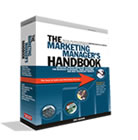
Eric Gagnon (eric@realmarkets.net), is president of GAA (www.realmarkets.net), a sales and business development consulting firm, and is the author of The Marketing Manager’s Handbook, the master study guide for the Business Marketing Association’s Marketing Skills Assessment, Skill Builder, and Certification (MSA/B/C) programs.
For more information on The Marketing Manager’s Handbook, available to BMA members at a special discount, link to:
http://www.businessmarketinginstitute.com/book.html
_____________________________________________________________
Test, Train, and Build Your B2B Marketing Skills for Better Sales Success: BMA Announces New Assessment, Training, and Certification for B2B Marketing Managers
For more information on the new BMA Marketing Skills Assessment, Skill Building and Certification (MSA/B/C) training and professional development program, visit http://www.businessmarketinginstitute.com