











Tuesday Marketing Notes (Number 56—October 24th , 2006)
A B2B Marketing Newsletter for BMA Members
____________________________________________________________
MAKE SURE YOU CONTINUE TO RECEIVE EACH ISSUE OF TUESDAY MARKETING NOTES—CLICK HERE TO RENEW YOUR FREE SUBSCRIPTION
(NOTE: if you’ve already signed up previously at this link above, no need to do so again)
INDEX TO PAST ISSUES OF TUESDAY MARKETING NOTES:
Click here
Special Savings Promotion for BMA Members—Click here
–––––––––––––––––––––––––––––––––––––––––––––––––––––––
Ending the Sales/Marketing Disconnect: Nine Ways to Be a More Effective Marketing Manager (Part 2)
Last week in Part 1, we covered the first four of the nine ways marketing professionals on both the company and agency sides can be more effective, by closing the “sales/marketing disconnect” that occurs all too often with marketing programs that are seen by the company’s sales team and senior management as being increasingly disconnected from the goal of generating measurable sales response.
In order of their importance, here are the next three . . .
5. Forget About “Branding.” You Need to Sell Your Product

The word “branding” has been used and abused everywhere for so long and so often by people who write about marketing that it now means just about anything the writer wants it to mean. And much of what is written about branding in B2B marketing today has been borrowed from consumer brand theory, which does not apply to the vast majority of companies operating in business-to-business markets.
First, most of us working with small to mid-sized companies in B2B don’t have the kinds of ad budgets that can influence branding, or build brand image. Even if we did, hard-nosed customers in our markets aren’t very much influenced by brand-based marketing—they’re looking for product facts, features, benefits and capabilities, so they can make sound purchasing decisions and not lose their jobs by making a bad choice.
The current loose understanding of “branding,” which is spending money to generate a kind of weak memory about your company’s product, called “brand awareness,” might work for demand-pull consumer marketing programs, where a big consumer marketer like General Mills can throw a few million more into spot TV buys to grab three more market share points for Lucky Charms at the grocery store, but it isn’t going to work for your company’s materials handling, specialty adhesives, IT or any other business serving an industrial, trade, tech, or other B2B market. The kinds of practices required to run branding-oriented marketing programs have nothing to do with running powerful, measurable campaigns that generate sales leads, inquiries, or any other tangible results thats leads to increasing your company’s sales.
Worse yet, use of branding strategy in B2B can be deadly to your career. One of the truly tragic things I see in our field is when a young college graduate or MBA goes to work as a marketer in a small or mid-sized B2B outfit, head full of consumer-oriented branding theory, and immediately develops expensive “branding” ad campaigns, mailings, and other marketing projects—focusing on creating ads designed to evoke some sort of emotional “feeling” about their company’s product, and concentrating on other meaningless things, like what shade of blue to use on the new brochure.
What happens next when the expensive branding ads aren’t pulling leads for the company’s sales team is the marketing manager becomes marginalized in the company as one of “those marketing people,” and is seen as dead weight by those who feel they are doing the real work of making sales and closing new business for the company.
Branding = Reputation: What branding should mean to you, if you’re a marketer working with small to mid-sized B2B company, is that it’s just a fancy word for describing a company’s reputation: The perception your company has built from years of selling great products and providing great customer service.
When viewed in this light, don’t expect to buy your company’s reputation by buying a three-month ad campaign. Instead, (and this is assuming your company already makes great products) focus on what’s within your ability to control as a marketing manager, by striving to make your marketing program generate solid sales response—inquiries and sales leads—by clearly presenting your product’s most persuasive benefits in your marketing projects, and efficiently executing every one of those marketing projects with speed, power, and competency.
There are, however, some instances when branding is important in B2B, and this relates to the size of your company and its marketing program. For example, if you were a unit marketing manager with IBM or Siemens, two companies that spend massive ad budgets in B2B markets, you would have both the budget, and the need, to promote your company’s brand image through your marketing program.
But for most of us working in B2B marketing in small to mid-sized companies—and this means most of us—focus on using clear presentation of your company’s most compelling sales benefits as they are seen by the prospects in your market, do whatever you can to help your company build, sell, and service great products, generate sales response for your sales team in your marketing program, and your company’s brand image—i.e., its reputation—takes care of itself.
4. Find What’s Unique About Your Product that’s Compelling to Your Market
Most companies in most business-to-business markets sell products in mature product categories. This means that, on the surface, most products are perceived by prospects in these markets as being basically alike. Your job as a marketing professional is to discover the attributes and benefits of your product that make it truly unique compared to every other competitive product.
The key here is to present a unique benefit that is viewed as being unique and compelling to your prospect, and not the positioning that you, or your ad agency, wish your prospects would find compelling. If you’re using positioning or benefits that aren’t compelling enough to the prospects who read your ads and mailings, they won’t be compelled enough to contact your company for more information on your product. You can find your product’s most unique and compelling benefits by de-briefing your company’s sales reps, through market testing, and getting your marketing program in front of real, live prospects at trade shows or sales presentations.
Another part of being unique means being bold enough to call your leading competitors out, comparing your product’s differentiating features against them, in front of your market, by using comparison charts and sales copy. Comparison charts in ads and mailings give your readers a quick view of what makes your product unique relative to your named competitors.
Sometimes being unique means being different, and taking bold risks by running ads that don’t look like everyone else’s ads. But by being bold, and clearly differentiating your product in ways that are compelling to readers, you give your potential prospects a clear reason to look more closely at your product, instead of someone else’s, and your clear, benefits-oriented copy does the rest of the job of getting your reader to move closer to buying your product. In crowded B2B markets populated by many look-alike players, you run a greater risk of failure by not being bold enough to be different.
3. Show What You Know
I’m sure you’re using the Internet to search for and compare information on all kinds of products for your home or business, and your prospects are, too. This is a major new trend in marketing that’s converting all of us, including your prospects, from passive, semi-disinterested “audiences,” into active and involved seekers of information.
Being able to pull up information on every product under the sun with a few keywords brings product facts, features, capabilities, and applications to the forefront. Your readers—your prospects—are demanding to see just the facts about your company’s products, and how your products can help them, not the same tired marketing hype they’ve been seeing for decades in the usual tired ads, product brochures and other marketing deliverables most clueless marketers are still putting out there.
You can revolutionize your own marketing program by using a technique that I call “show what you know,” which means putting your company’s knowledge that’s useful to its market to work in your marketing program.
Every company, including yours, owns proprietary know-how that helps prospects to be more effective in their work life, using its product, and which it can use to make its marketing programs more effective. This information is valuable to your prospects because it:
• Shows prospects how their tough problems are solved, by using your product;
• Simplifies complex technologies, processes, or problems for the prospects, educating and informing your prospects;
• Shows prospects that it’s a safe choice to buy your product, because they can see case studies and user profiles from your current customers
Your job as a marketer is to uncover this knowledge, bring it into to your marketing program, and use it as a method for enhancing its selling power in your market.
“Show what you know” deliverables can take these forms:
White papers, detailing the major needs, issues, or controversies in your field, and how your company and its product are uniquely positioned to address these common needs in your market;
Books, booklets, or reference guides, providing prospects with deep information on technical disciplines, or new, must-know information, such as current standards, new regulations, or compliance guidelines;
Software programs, to make your prospects more productive by saving them time on common calculations, analysis, or reporting requirements in your field;
Videos or DVDs, sharing the unique insights of your company’s executives and technical staff, and focusing on how this knowledge, and your product, helps the viewer be more productive and successful on the job
You can boost the potential sales response of any marketing project in your program by incorporating these “show what you know” deliverables into your ads, mailings, or Web keyword search and advertising promotions. Doing so gives your potential prospects a more compelling reason to respond to your ads or promotions, but most important, it positions your company as a thought leader or expert in its field, giving your prospects another strong reason to buy from you, and not from one of your competitors. “Show what you know” optimizes your marketing program for the new ways your prospects are seeking out, comparing, and assessing product information, using the Internet.
Next week, we’ll cover the two most important ways to close the sales/marketing disconnect by being more effective as a marketing professional . . .
Comments? Questions? Send them to me at: eric@realmarkets.net
___________________________________________________________
Attention Marketing Managers:
Get a Second Opinion on Your Marketing Program. . . FREE
Think you should be spending less and getting more from your current marketing program? Tired of hearing empty “branding” promises from your ad agency that never seem to translate to actual, measurable sales results?
Or, have you been losing out on important new selling opportunities due to poor execution in your marketing projects?
Let us give you a second opinion on your current B2B marketing program and deliverables, at no cost or further obligation.
For more information, contact us at: ericgagnon@verizon.net or click on this link below:

_____________________________________________________________
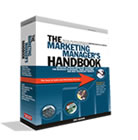
Eric Gagnon (eric@realmarkets.net), is president of GAA (www.realmarkets.net), a sales and business development consulting firm, and is the author of The Marketing Manager’s Handbook, the master study guide for the Business Marketing Association’s Marketing Skills Assessment, Skill Builder, and Certification (MSA/B/C) programs.
For more information on The Marketing Manager’s Handbook, available to BMA members at a special discount, link to:
http://www.businessmarketinginstitute.com/book.html
_____________________________________________________________
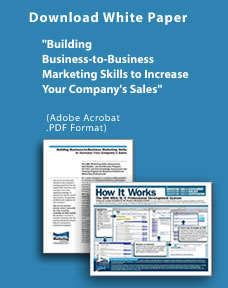
Test, Train, and Build Your B2B Marketing Skills for Better Sales Success: BMA Announces New Assessment, Training, and Certification for B2B Marketing Managers
For more information on the new BMA Marketing Skills Assessment, Skill Building and Certification (MSA/B/C) training and professional development program, visit http://www.businessmarketinginstitute.com