











Tuesday Marketing Notes (Number 54—October 10th , 2006)
A B2B Marketing Newsletter for BMA Members
____________________________________________________________
MAKE SURE YOU CONTINUE TO RECEIVE EACH ISSUE OF TUESDAY MARKETING NOTES—CLICK HERE TO RENEW YOUR FREE SUBSCRIPTION
(NOTE: if you’ve already signed up previously at this link above, no need to do so again)
INDEX TO PAST ISSUES OF TUESDAY MARKETING NOTES:
Click here

Special Savings Promotion for BMA Members—Click here
–––––––––––––––––––––––––––––––––––––––––––––––––––––––
B2B Print Advertising (Part 7: Planning and Executing a New Print Advertising Campaign)
by Eric Gagnon
Print advertising campaigns require longer lead planning times than any other element of your marketing plan. Since most trade publications run on monthly publishing schedules, the process of executing a print advertising program nearly always has a built-in lead-time of four to eight weeks from your final approval and placement of an ad, until you begin to see response from the ad in the publication.
This lead-time also assumes that you have finalized your print advertising deliverables (the “creative”), and that your advertising materials are already produced and ready to send to the publication. If not, then add two to four additional weeks in front of the publication’s required lead time above.
There are always exceptions. For example, you are always able to make faster placements in a weekly or bi-monthly publication (about two to four weeks’ lead time).
Occasionally, you can even make emergency placements in monthly publications having last-minute “remainder space” opportunities in an issue that’s ready to go to press. Nonetheless, count on your print advertising program as being the one element of your marketing plan requiring the longest advance planning.
The time estimates assigned here for each stage of the advertising development and execution process below are typical timeframes. They are very important, because they help you assign a definite time span to each stage of the process, and give discipline and focus to a task that is often plagued by unnecessary delays.
Advertising Creative Development and Production (1-4 Weeks)
For planning purposes, it will generally take your ad agency or marketing consultant one week (at the shortest), to four weeks (at the most) to create, develop and produce your company’s ad campaign.
Step 1—Your De-Brief to the Agency
The process of creating a new advertising campaign begins with the presentation of your company’s sales and product marketing objectives to your ad agency. This is when you provide your notes on sales benefits and copy points for your company’s product (see our previous TMN on copywriting at ---) to your agency, and all other background information they will need to create your advertising, and your initial publication placement suggestions for the advertising schedule.
At the end of this first meeting, your ad agency should have all the background information they need to get to work on your advertising layout (“deliverable”).
Step 2—The Ad Agency Presentation
Roughly one to two weeks after your initial de-briefing, your ad agency should be prepared to present you with its ad “comps,” semi-finished ad layouts illustrating the agency’s choices of its best advertising layout, copy, and positioning concepts for your campaign.
Prior to this presentation, you should expect that your ad agency has evolved its own internal process of brainstorming, creative development, and layout on your advertising program to the point where it has created several potentially workable advertising campaign concepts. If your agency is talented enough to cull its own creative work prior to this meeting, it will have also eliminated some of its own ad concepts during the agency’s internal creative process.
Ideally, if you have provided your agency with the required sales copy benefit information in your initial de-brief to them, and if your ad agency has incorporated these benefits into their work product, the successful result of this stage will allow you to make the final selection of the advertising concept or deliverable you’re going to use for the ad campaign.
It’s just as likely, however, that there will be some aspects of the selected ad that could be made better—missing product features or benefits, copy editing problems, and words or phrases in headlines or copy that could be improved.
This scenario often becomes the point of maximum danger for any advertising project. The longer an ad deliverable remains unfinished, the higher the probability is that it will never see the light of day. Our adage: “Too many eyes will kill your advertising,” applies to this stage of advertising development, if you permit too many people within your company to add their comments and suggestions to your ad layouts. Therefore, it’s critical that you exercise the leadership required to finalize any remaining copy and layout issues in an ad, even if this means you must ignore suggestions that could further delay your primary task of marketing execution.
The “A/B split:” There are some instances where your ad agency will develop two equally good advertising approaches to a campaign. Both ad layouts will be so compelling that there will be no clear consensus on which ad campaign should go into print. This is always a blessing in disguise, since it provides the skilled marketing manager with an opportunity to test both advertising approaches, with an “A/B split.”
If you have two strong ad concepts, have your ad agency or marketing consultant develop both as completed deliverables, place them alternately in each issue of your targeted publications, and then measure the response generated (inquiries or sales) by each ad.
Printing processes allow some larger publications to provide an A/B split within the same issue—that is, your ad “A” can be placed evenly throughout half of an issue’s press run, and your second ad “B” can be placed evenly throughout the other half. By key-coding the call-to-action portion of your ad (see Chapter 17 on testing), and setting up a specific Web URL or response phone number for each, you can track response for each ad. In publications where you can’t run an A/B split, you can run each ad layout in alternate issues of the same publication.
Step 3—Final Ad Production (1-2 Weeks)
Once you and your ad agency have finalized your ad layout and placement schedule, your agency typically requires 1-2 weeks to complete the production of your ad deliverables, and to produce the final, “camera-ready” ads specifically sized to the production dimensions and requirements of the publications in which the advertising will be placed.
The time required to complete the production process has been dramatically reduced in recent years, with the advent of desktop publishing, digital pre-press systems and Internet ad delivery. Accordingly, this part of the project often runs closer to one week than a full two weeks.
Step 4—Space Reservations and Ad Submissions (Less than 1 Week)
If your company maintains the typical business relationship with its ad agency, where your agency places your company’s advertising on its own, as your agent, and receives a 15% commission from the publication, the process of reserving ad space and placing your ads will be handled by your ad agency. It’s still important to understand the process, so you can avoid any production delays that may occur during the final stages of ad placement.
Ad space close and space reservation due dates: Roughly four to five weeks before ad materials are due to be submitted, and two to three weeks before the publication date, a publication will require you to formally reserve ad space for the desired issue date of its publication. In most instances, all it takes is a phone call or a handshake to reserve space in the publication, with your agency’s insertion order serving as the final written document that commits your company (through its ad agency) to an advertising schedule in the publication. Major business and trade publications will, however, require you or your agency to fill out, sign, and submit the publication’s own advertising space order or reservation form, in advance of submitting the insertion order.
Insertion orders: The filled-in insertion order, or “I.O.,” is the formal business contract between you, your advertising agency, and the publication, for placement of all advertising in that publication. Technically, since your ad agency is drawing its usual 15% space commission from the publication, it is acting as your “agent,” and is liable for all of your company’s advertising space charges with the publication. The ad agency then invoices your company for the full amount of advertising it places on your behalf. Then, the agency pays the publication directly, deducting and pocketing its 15% commission from the “gross” ad space charge, once your company pays the ad agency for the full amount of its advertising expenses.
The insertion order sets forth all the pertinent details of the ad placement—the issue dates, frequency discount, ad sizes and specifications, and is usually signed by a principal at the ad agency. Insertion orders are usually issued by the ad agency, and are completed at the same time the verbal space reservation is made for the publication (which usually makes it unnecessary to fill out the separate “ad space reservation” form supplied by the publication).
Ad Materials Submission
The Internet has combined with desktop publishing systems on Macs and PCs to revolutionize the process of submitting ad materials to most publications.
Every publication these days allows ad agencies to submit ad files to a publication’s production department over the Internet, either by direct mail, or Internet FTP (File Transfer Protocol). Most publications now accept ad files in uncompressed Adobe Acrobat .PDF file format.
All-electronic ad submission eliminates the need for, and the expense of, film negatives, overnight Fedex charges, and other back-end production charges for submitting ad materials. As a marketing manager, the major benefit of electronic submission gives your marketing program a dramatic increase in response time and flexibility. You now have more time before ad submission deadlines, and more flexibility if you must change, replace or reschedule your company’s advertising.
Electronic Proofs of Your Advertising
You can proof all of your advertising and other printed materials, both on-screen, and in print (via your laser or color inkjet printer) with Adobe Acrobat .PDF-format files, also known as “PDFs.” Acrobat PDFs are output from desktop publishing programs (such as InDesign) and give you an exact visual representation of what an ad (or any other printed material) looks like in its final, printed form. Depending on how they are output, colors displayed on an ad on your PC’s screen from an Acrobat .PDF proof bear a reasonable resemblance to the colors of the final printed piece.
Acrobat .PDF proofs print out very well on your office laser printer, and in most instances, black and white printouts of ads for text proofing, along with on-screen checks for color, are acceptable for most proofing tasks. Once you’ve done a few printing jobs or ad placements using .PDFs, and are comfortable with the final results in print, you and your ad agency or marketing consultant will never go back to the “old days” of just a few years ago, of proofing hard-copy bluelines and matchprints.
When you need film and a matchprint: There are still times, however, when you should order an ad to be submitted in the conventional fashion—film and a matchprint, a color proof produced from the actual film negatives sent to the publication:
• When making a larger-than-usual advertising expenditure with a big circulation business or general-interest publication, where it is imperative that you eliminate all possibility of minor mistakes or delays that may occur in electronic ad transmissions. In other words, if your usual ad placements are $5,000 pages in Information Week, but this quarter you’re going with a full page in Business Week at $64,100—get a matchprint;
• When color is critical: Digital color matching is still not well-implemented by the production departments in some publications. If exact color matching in your ad is critical (as in photos or solid colors), get a matchprint made from your ad’s film negatives.
All-electronic, Internet-based ad transmission gives a major boost to your company’s speed of execution of its print ad campaigns. “Friction”—those unneeded interruptions and delays to the smooth process of flawless execution of your company’s ad campaigns, happens whenever production of your company’s advertising files has to be stopped, then dumped to disk, output, handled, packed, messengered, couriered, and otherwise messed with in the real world. Use the Internet for what it’s good for—fast, “frictionless” transmission of your marketing deliverables—and make it an important part of your marketing execution.
Comments? Questions? Send them to me at: eric@realmarkets.net
___________________________________________________________
Attention Marketing Managers:
Get a Second Opinion on Your Marketing Program. . . FREE
Think you should be spending less and getting more from your current marketing program? Tired of hearing empty “branding” promises from your ad agency that never seem to translate to actual, measurable sales results?
Or, have you been losing out on important new selling opportunities due to poor execution in your marketing projects?
Let us give you a second opinion on your current B2B marketing program and deliverables, at no cost or further obligation.
For more information, contact us at: ericgagnon@verizon.net or click on this link below:

_____________________________________________________________
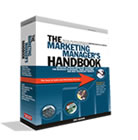
Eric Gagnon (eric@realmarkets.net), is president of GAA (www.realmarkets.net), a sales and business development consulting firm, and is the author of The Marketing Manager’s Handbook, the master study guide for the Business Marketing Association’s Marketing Skills Assessment, Skill Builder, and Certification (MSA/B/C) programs.
For more information on The Marketing Manager’s Handbook, available to BMA members at a special discount, link to:
http://www.businessmarketinginstitute.com/book.html
_____________________________________________________________
Test, Train, and Build Your B2B Marketing Skills for Better Sales Success: BMA Announces New Assessment, Training, and Certification for B2B Marketing Managers
For more information on the new BMA Marketing Skills Assessment, Skill Building and Certification (MSA/B/C) training and professional development program, visit http://www.businessmarketinginstitute.com