











Tuesday Marketing Notes (Number 64—January 9th, 2007)
A B2B Marketing Newsletter for BMA Members
____________________________________________________________
MAKE SURE YOU CONTINUE TO RECEIVE EACH ISSUE OF TUESDAY MARKETING NOTES—CLICK HERE TO RENEW YOUR FREE SUBSCRIPTION
(NOTE: if you’ve already signed up previously at this link above, no need to do so again)
INDEX TO PAST ISSUES OF TUESDAY MARKETING NOTES:
Click here

Special Savings Promotion for BMA Members—Click here
–––––––––––––––––––––––––––––––––––––––––––––––––––––––
Selling to the Government: (Part 1: Ten Myths from the Federal Market)
Selling to government at all levels—Federal, state, and local—can open major new sales opportunities for many companies. This week and next, we have an expert on hand to present some of the essential techniques B2B marketing professionals need to know to market their companies’ products and services to the government.
Mark Amtower, founder and president of Amtower & Company is a nationally recognized expert in marketing to the Federal government. Mark is also the author of "Government Marketing Best Practices," published in January, 2005 and now in its second printing.
This week, Mark discusses the ten myths of marketing to the Federal government, and next week Mark and I will discuss the nuances of dealing with this market, and specific techniques B2B marketing professionals can use to market and sell their company’s products to the Federal government (E.G.).
Ten Myths from the Federal Market
by Mark Amtower
Over the past several years, there has been a revitalized interest in selling to the U.S. government market, at the Federal, state and local levels. In part this is because of the uncertainty in our economy, as well as interest in Homeland Security, and the conflicts in Iraq and Afghanistan. Press coverage has picked up on this topic, and even Wall Street seems to have a renewed interest in the government market.
While the interest is growing, there are many misperceptions about marketing to government, and this is especially true for small and medium-sized businesses. Part of this is due to the fact that we in the government market have our own language, and we are loathe to explain it to the uninitiated. Another reason is that it’s easier for many to assume they can’t play in this market, rather than to work at getting into the market. It’s always easier to complain than to act.
There are also some who think it will be simple to enter the government market. They think if they just announce their presence, the orders will flow. These companies will most certainly fail, because regardless of who you are and what you sell, government market entry is never as quick, seamless, simple, and lucrative as people think it will be.
I receive calls every week from companies wanting to enter the government market. Although I don’t have a “one size fits all” response I try to explain that the market is big enough to accommodate many, but there are very rarely any new entries that are a “quick hit.”
Some seem to believe that you get a GSA Schedule* and the phone will ring, as if a Schedule was a cure-all—tell that to the thousands of GSA Schedule holders with zero sales. There are 12,000-plus GSA Schedule contracts, and in FY 2006, over 4,000 companies on Schedule made no sales at all.
Everyone is looking for the easy way, the quick hit. The hardest point to get across is there is no single answer for every company, and all government marketing efforts involve hard work and education, and then more of the same. This is a huge market—actually a sometimes confusing combination of many markets and it is an incremental market for all vendors who enter into it.
But the government market is worth extra effort because once you are in, once you understand its process and the nuances, you can have a steadily growing income base from the only recession-proof market in the world.
To keep other companies out of the market a number of rumors were perpetuated by those making big money from the government. Over the years, these half-truths, myths, and outright untruths have evolved and spread.
This brief introduction is an attempt to dispel a few of the misconceptions about selling to Fortune One—the U.S. government market . . .
Myth 10: It’s Too Difficult to Break into this Market
Outside the “Beltway," Washington, DC is viewed as an insular world, full of intricacies, intrigue, insider partnerships, decoder rings, and secret handshakes. Much of this is true. You need to know lots of things and lots of people to play in the arena of the mega-contracts, an arena dominated by Lockheed Martin, Northrop Grumman, Unisys, and a handful of others.
The prime contractors spend millions of dollars bidding on specific contracts, putting together the right team (sub-contractors as well as key employees), following and influencing the direction of a contract as it evolves. Most companies are not going to enter the arena of prime contracting without serious growing pains.
Does this mean you can’t play here? Of course not. But you are not going to do it as a prime contractor. If you have the right product or service, and can offer some other significant “value-adds”, there is always the role of sub-contractor, GSA Schedule vendor, or selling in the open market. There are many ways to play.
If you are a product vendor, start with the open market and develop some market share with targeted marketing efforts. The Feds can make purchases up to $2,500 without contracts, as long as they use the government SmartPay credit card. After you build a sales beachhead, then, and only then, decide if you need to migrate to GSA Schedule, or some other contractual vehicle. Part of the decision-making process will be input from government customers and prospects asking what contracts your product is on. Listen to your customers and make certain you have some way of collecting this data from your inbound sales staff.
I have worked with over 150 product vendors that have developed strong market share exclusively through open market sales, as much as $15 million a year, with absolutely no contracts. It can be done, given a definable audience, a product that lends itself to micro purchase (under $2,500 an order), and a company skilled at selling and delivering at this level. For example, this “micro purchase” arena is custom built for business catalogs.
The real key to government market entry is a good understanding of the actual landscape before coming in: does the government buy what you sell; if so, who are the current sellers (your competition); what seems to be the preferred buying method (GSA Schedule, other contract, open market); and what you offer that might differentiate you from the competition. Understand this and you now have a chance at success.
Myth 9: The Government Demands the Lowest Price
For years this was the mantra, especially for companies selling through the GSA Schedule, and there is still a grain of truth to it. However, the government only gets the best price in certain instances. A competitive price is necessary, but there are other factors that can influence the sale.
Quick delivery is a major differentiator, especially for products. If an employee needs a product today or tomorrow, delivery and a competitive price win. Not the best price, but a competitive price, with quick delivery.
Other factors, like quality, reputation, customer service also play a role here, each with greater or lesser influence on each sale. Nobody is saying this is easy, but the potential returns are huge. Your chances of success are already improving if you know this and act accordingly.
Myth 8: We Have a Great Product. Buyers Will Line Up to Get Our Stuff
I get calls from people all the time who have invented the latest, greatest widget. “I hear you know the President of CDW-G—get me in to see him and I’ll give you a finder’s fee.” Or, “Who do I talk to at the Defense Department—our troops need this now!”
There are always great products. I’ve never had a call someone who had an average or junk product. They’re all great! But there has to be more.
If you are selling direct, you have to understand that the government only buys commercially viable products—stuff other people have already bought and used. They do not buy brand new, untried and untested (on the market) products.
If you are attempting to attract the attention of the reseller channel (resellers already selling to the government), you have to add value. Will your marketing drive sales to your reseller partner? Can you supply your reseller with market development funds (a.k.a. “co-op dollars”)? Are you already a commercial success? Is there a definable audience in the government for your product whose needs are not currently being met? Or is the incumbent supplier vulnerable for other reasons?
If you are selling services (and the government buys lots of different services), there is a similar set of criteria that comes into play.
The right market entry strategy is the key to your ultimate success!
What do you bring to the table aside from the product or service? How can you differentiate yourself? Define these, and your chances of success are looking better.
Myth 7: Having a GSA Schedule Makes the Cash Register Ring
Selling exclusively through the GSA Schedule is myopic and rarely leads to significant market share, except for those at the top of their respective product categories. It also brings serious headaches to those who are not fully prepared.
You need the proper accounting in place to be able to rebate the .75% Industrial Funding Feed to GSA on a Quarterly basis. Don’t know about the IFF? Well, there’s more! How about an audit for EEO compliance? There are many things that come along with a government contract.
That is not to imply you may not need a GSA Schedule. It is simply to warn you that there are things about getting a government contract that you have to be aware of before you go after one.
If that is not enough, consider this: The top 2% of GSA Schedule vendors take 60% of all Schedule dollars. Why? Because they understand the marketing and sales nuances demanded by this market, and they are able to use the Schedule to their advantage. Further, the Schedule is usually a part of the strategy, not the entire strategy.
Understand that the GSA is not a cornucopia, and that intelligent, targeted marketing is required, and your chances of success have again improved.
Myth 6: We Can Send Press Releases to the Government Publications and Reporters Will Call
This is akin to planning your retirement by purchasing lottery tickets. Every company and every PR firm sends press releases to virtually every publication, and the government trade press is no different.
Every morning each reporter and editor goes through the many press releases in their email in-box or at the fax machine to see if something important is there. If not, it goes into the trash bin. A cursory glance is all most press releases ever get.
Expecting a reporter to read a press release is not realistic. Expecting an editor to read a press release is less so. Understand what each reporter writes about, then specifically targetyour messages to one reporter with something newsworthy. Follow-up with them to see if they read the release and explain what made it different. Re-send the release if they ask for it. Develop relationships with specific reporters, and then send your press release.
When—and if—a reporter or editor calls, they will have very specific questions, and will most likely have little or nothing to do with the reams of paper you or your PR firm sent. When you start getting press in government publications, your chances of success are getting real.
Myth 5: Our Brand Name Recognition Will Drive sales in the Government Market
Larger B2B companies assume their commercial success will translate into government business. Relying on a strong commercial brand to drive sales often creates unrealistic expectations.
Brand is important, and a strong name can help, but it is not a guarantee. Dell dominates the desktop in government, but Dell wasn’t DELL when it started selling to the government in 1990. Dell started small, and grew in this market in tandem with its growth outside this market. It had a good product, good support, good marketing, and incremental growth. And Dell learned lots along the way.
This myth is almost as laughable as the statement: “Our corporate ad agency can do government.” Most national ad agencies and PR firmshave absolutely no clue about the government market, the nuances that make it different, or the legitimate hot buttons. They cannot “speak” government and invariably they will spend more money with less impact because of their lack of market knowledge. And often, their efforts hurt more than they help.
The government market is different, and it requires understanding the nuances before major expenditures are made in advertising programs, that can often lead to costly missteps.
Using a corporate ad agency to drive your government marketing program can kill all the growth you may have experienced by overcoming the first five myths. However, use one of the few ad agencies (if you need one) with true government savvy, and success is almost within reach.
Myth 4: E-mail Works Everywhere, So If We Get the Right E-mail List, We’re In
You can get e-mail addresses of key Federal managers off government Web sites or from one of many scam artists selling junk names through spam e-mail. But if you use the e-mail addresses without permission of the recipients, there are several things that could happen. Your ISP (the company that emails for you) may be blocked by individual users or by a Federal agency Webmaster. If you are a habitual spammer, your corporate Web site may be blocked from an entire agency. You can also be blacklisted by the agency.
At the very least, you will irritate more people than you think, and these people can and will remember who you are, and will simply delete anything from you in the future. People who work in the government are no different than anyone else when it comes to getting e-mail from someone they don’t know.
If you are going to use e-mail, do so responsibly. Create an opt-in program that provides real information to people who have asked for it. Sponsor other e-mail content, such as articles from publications, associations, or special interest groups.
E-mail marketing is an incremental process, just like this (or any) market, and it requires discipline.
Spam will kill all your previous efforts. Doing e-mail right will help increase your chances of success.
Myth 3: We’ve Got to be at Big Government Trade Shows like FOSE—If You’re Not There, Everyone Notices
Big events eat big bucks, often without significant return. Exhibiting and expecting the right people to come by your booth is just not realistic, yet it’s a common misperception.
When selling to government, there are small events for more targeted Federal groups—for example, special interest groups, which are much less expensive and give you the ability to have real face time with key influencers in your niche. Most companies have products and services that are better suited to niche government audiences, so these niche events are perfect opportunities.
Find the niche events—there are hundreds of them in the government market. These are where your real buyers and influencers are. Target these prospects, and you are closing in on success.
Myth 2: We’ll Hire a Guy in DC and Give It Six Months
This short-term commitment reflects a voluntary ignorance of the market that’s inexcusable. But oddly enough, it happens with hundreds of companies each year. The reasons vary, but often include these elements: A person is hired who looks good on paper, sounds good in person, but who hasn’t really delivered in their career. Or, you hire someone who just left the government after 20-plus years as a procurement or contracting officer—someone who may be able to exploit a few relationships, but who has a totally different skill set from what you really need.
Hiring the wrong person and giving them a limited window of opportunity is the kiss of death—but hiring the right person with the same window isn’t much better.
Understanding that getting into this market isn’t a short-term process is critical, as critical as hiring the right people. At minimum, this is an 18 to 24-month commitment to get your first significant business.
Management expectations have to be predicated on a working knowledge of the market, not based on rumor and innuendo, thinking you can make a quick hit, or the fact that your commercial brand name is big.
Get management to understand the real commitment necessary in terms of time, staff and money and you’re almost there.
Myth 1: The Biggest Myth is a Self-Imposed Limitation: It’s Too Big and We Can’t Do It
In my career I have worked with businesses as small as a couple million in sales. Given time, I have helped several of these grow into $20 million dollar companies with 30% or more of their sales in the public sector.
The government market—Federal, state and local—has 20 million employees and represents 25% of the GDP. That’s one quarter of all spending in the United States.
The over 86,000 governments in the United States buy every legitimate business product and service imaginable. But this market is a quagmire of niches—that’s why a one-size-fits-all marketing approach doesn’t work. In the government market, some companies are better suited to sell on the open market, others more attuned to the channel approach, while some are natural sub-contractor material. All need good-to-great advice before entering this market, and every step along the way. Get some legitimate guidance before entering this most lucrative of markets.
Good luck and good hunting!
Mark Amtower, founder and president of Amtower & Company, has worked with hundreds of companies representing a vast array of products and services (manufacturers, publishers, event producers, catalogers, resellers, software developers, associations, and others) helping each to better define and reach their target audiences within the expansive federal market.
You can reach Mark at: Mark@GovernmentExpress.com, or visit the Amtower & Co. Web site at: www.GovernmentExpress.com
* GSA Schedules are contractual vehicles which allow thousands of companies to sell products and services at pre-negotiated prices for a set length of time. Over 10,000 companies hold over 12,000 of these contracts, and that represents over 10,000,000 SKUs (line items). However, the GSA Schedule is a “fishing license” with no guarantees. You still need the “bait” (Read: Marketing!)
Questions? Comments? Send them to me at eric@realmarkets.net
___________________________________________________________
Attention Marketing Managers:
Get a Second Opinion on Your Marketing Program. . . FREE
Think you should be spending less and getting more from your current marketing program? Tired of hearing empty “branding” promises from your ad agency that never seem to translate to actual, measurable sales results?
Or, have you been losing out on important new selling opportunities due to poor execution in your marketing projects?
Let us give you a second opinion on your current B2B marketing program and deliverables, at no cost or further obligation.
For more information, contact us at: ericgagnon@verizon.net or click on this link below:

_____________________________________________________________
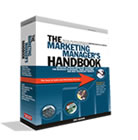
Eric Gagnon (eric@realmarkets.net), is president of GAA (www.realmarkets.net), a sales and business development consulting firm, and is the author of The Marketing Manager’s Handbook, the master study guide for the Business Marketing Association’s Marketing Skills Assessment, Skill Builder, and Certification (MSA/B/C) programs.
For more information on The Marketing Manager’s Handbook, available to BMA members at a special discount, link to:
http://www.businessmarketinginstitute.com/book.html
_____________________________________________________________
Test, Train, and Build Your B2B Marketing Skills for Better Sales Success: BMA Announces New Assessment, Training, and Certification for B2B Marketing Managers
For more information on the new BMA Marketing Skills Assessment, Skill Building and Certification (MSA/B/C) training and professional development program, visit http://www.businessmarketinginstitute.com