










 Tuesday Marketing Notes (Number 7—November 8th, 2005)
A B2B Marketing Newsletter for BMA Members
____________________________________________________________
B2B Direct Mail: Don’t Forget the Fundamentals (Part 2)
by Eric Gagnon
In last week’s Tuesday Marketing Notes, we discussed some proven techniques for developing high quality, self-compiled mailing lists. Now we’ll cover some other, important aspects of direct mail projects that will help you minimize problems in execution and improve sales response on your own mailings to prospects and customers.
Need to Scale Your Mailing Program? Beware of Rented Mailing Lists
In last week’s TMN, I discussed the prime importance of mailing lists to your direct mail projects, and some of the ways you can build your own mailing lists. However, there will be times when the economics and scale of your marketing effort requires you to broaden the reach of your direct mail program. This usually means you’ll have to obtain third-party mailing lists, rented from a mailing list broker.
My two words of warning to you: Be careful!
I’ve learned from experience to be skeptical of the promises made by mailing list brokers about the lists they offer for rental. Despite my strong warnings, I’ve seen clients jump headlong into massive direct mail programs, mailing to large “compiled” mailing lists of industry “buyers,” that yielded more undeliverable mailing pieces returned from the Post Office than actual inquiries or responses.
It’s a fact that rented mailing lists generate lower response than self-compiled lists. The lowest-pulling of these rented lists are so-called “buyer” or “compiled” mailing lists. These are data-mining projects created by mailing list brokers combining various low-grade product registration lists, warranty card lists, and mail survey results from dubious sources.
Compiled and buyer lists are like New York street vendor hot dogs: You never know what’s in them, how they were made, or how old they are. They’re notoriously inaccurate, outdated, and unresponsive. Stay away!
Now, let’s get back to your problem of achieving scale in your direct mail program. If you’re running a major direct mail effort, or if you need reach a wider segment of your market, the only rented lists you should consider are subscriber mailing lists from the major trade publications in your industry. These lists, which are owned and maintained by the trade publications themselves, and offered for rental through list brokers, are the only fairly accurate and reliably sourced mailing lists you should rent from a broker.
Because these lists are maintained by the publications, you can mail to them with the knowledge that the names on the list belong to the industry served by the publication, and that these names and addresses will be reasonably up-to-date.
Even though you can be fairly confident of the accuracy and relevancy of publication subscriber lists, as with any rented mailing list, you should always mail to a small test quantity of names before mailing larger amounts. To minimize your risk and expense, mail to a small quantity first (2,500 to 5,000 pieces) to gauge your sales response before moving to larger buys on these lists.
Be Your Company’s “Chief Mailing List Inspector”
Faulty mailing list data integrity—inaccurate data entry, dropped fields, or major list processing errors—are potential problems that are often left undetected until they become expensive to correct or, worse yet, are only noticed after the mailing has dropped.
To some degree, most companies suffer from data entry mistakes and inconsistent sales recordkeeping practices in their internal customer and prospect databases. These problems result in poorly spelled or mis-typed address information fields, out-of-date contact name and title fields, and major mailing list problems, such as undeliverable mailing addresses and transposed or missing fields.
Most companies compound these errors by having their mailing lists shipped directly from their IT folks to their ad agency or lettershop, without a careful visual inspection by the marketing manager or other responsible person. These problems are spotted only at the very last minute before the mailing list is to be processed, but not in time to avoid a significant mailing delay.
How to inspect a mailing list: It’s essential for you to visually inspect every mailing list used in your company’s direct mail projects. Make sure to check every mailing list for the following:
• Database field integrity: Check for obvious major database field problems, such as transposed fields (switched company and address fields, for example), and skipped or missing fields;
• Mailing address accuracy: Check for old, out-of-date, or undeliverable mailing addresses on your mailing lists. It often helps to have your sales manager and sales reps inspect and spot-verify address information on their key customers and accounts as a part of this process;
• Correct presentation: Check for other obvious problems, such as incorrect salutations (Mr., Ms.), and misspelled names, companies, and cities, people who’ve left their jobs at the companies on your list, incorrect Zip Codes, etc.
• Inspecting rented mailing lists: When visually inspecting a rented mailing list, watch out for these same potential problems, but pay special attention also to making sure that the contact names and companies on the output of the rented mailing list truly looks like the list you ordered. For example, inspect the company names and job titles closely on the mailing list: Are these companies known to you, and are they the companies you are trying to reach in your mailing?
Are the job titles and functions listed for the individuals on this list the types of individuals you want to reach? Mailing list owners and brokers occasionally make mistakes, and will process and ship the wrong mailing list to the wrong company, so check the list you’ve received to make sure it’s the list you originally ordered.
At best, database-related mailing list problems are the leading cause of delays in direct mail projects. At their worst, undetected problems in mailing list databases can kill a mailing’s sales and inquiry response rates.
This is very simple stuff, but I’ve seen it overlooked by marketing managers, or pushed further down the line to the mailing house or agency. That’s asking for big trouble. As a marketing manager, it’s up to you to be the first and last inspector of every one of your company’s mailing lists. Not an exciting task, but you’ll be thankful you did, the next time you discover a major list snafu.
Your Direct Mail Piece: Don’t Forget to “See with New Eyes”
When producing the mailing piece for your next direct mail project, don’t forget to see it with “new eyes,” that is, to view your mailing piece as the recipients of your mailing will see it. This means trying to blank out everything you know about your company, your products, and the mailing, and to look at your mailing from this new, objective, mildly disinterested point of view.
On direct mail pieces, this is especially important when you’re looking at the first thing your prospect sees on your mailing piece—the outer envelope or the address side of a self-mailing brochure. If the headline, sales copy and offer here don’t move your reader to open the envelope or unfold the mailer to read more, your piece is going straight to the trash can.
Ask these questions:
• Is the main headline on the outer envelope or address side of the mailing brochure instantly readable and understandable, and is it strong enough to motivate the reader to open your envelope or unfold the brochure to read on? Hint: If your headline looks too “loud,” or comes across as being too forceful, then it’s probably just bold enough to be noticed, and to motivate, your average, semi-disinterested recipient;
• Are product facts and benefits written clearly, and are they clearly readable to your average busy, semi-disinterested reader?
• Do you see clear instructions for taking the next step, such as ordering instructions, or contacting a sales rep for your company?
Never forget that the average reader of all of your company’s marketing materials is skeptical and generally turned off to the marketing efforts that are directed their way. You can cut through this fog by presenting your product’s major sales benefits, and your offer, simply and clearly.
What’s the Offer?
You’re going through all this trouble to select or build mailing lists, and to create a mailing piece, so give your mailing every chance for success by making an offer—“something extra” to close the deal with your prospect, and move them to the next step in buying your product.
Lower-cost B2B products and services (under $2,000) can often be sold direct from the mailing piece. If you’re attempting to sell directly from your mailing, you can, of course, offer a discount on the first order, an added product bonus included with purchase, or even a free limited-time trial offer. Money-back guarantees are also appealing “call to action” offers that get the order.
However, most B2B marketers sell much higher-priced products and services. Here, direct mail is used to generate inquiries and sales leads for their company’s sales reps, dealers, or distributors, and this is how direct mail is used most often in B2B marketing programs.
In this case—and in addition to first-time buyer discounts, add an informational premium as the “something extra” to motivate prospects to contact your company. These include:
• Free book, white paper, or report documenting successful case studies or applications using your product;
• DVD: Product demonstration or applications video;
• A free software program, related to your product’s field of use, to help prospects solve specialized technical problems in their job;
• Technical wall charts, applications diagrams, or other informational graphics promoting your company’s products and their use;
Is there something extra you can offer to recipients of your mailing, to further motivate them to contact your company? If not, should there be? You may only get one chance to sell to this prospect, so make the most of it.
Don’t Forget Telephone Followup
Most B2B direct mailings are executed to support the company’s internal sales force, and the most effective mailings are coordinated with telephone follow-up by your company’s sales reps. That’s why it’s very important to plan your mailings and coordinate with your company’s sales reps to make sure they’ll be able to follow up by phone with recipients of your mailing.
Follow-up phone contact puts your sales rep in touch with the prospect while they still remember your product, as it was described in your mailing piece. From the point of view of your company’s sales reps, this method of “mail first, then call” is also far preferable to cold-calling, which is a notoriously disagreeable and unproductive experience for both the caller and the person being called.
Wherever you’re renting or building mailing lists, don’t forget to make every effort to obtain telephone numbers for these contacts on your lists. This can be done through the use of number-matching services such as Gannett’s Telematch (www.telematch.com), or through your own Internet research.
One Mailing Shouldn’t Make or Break Your Marketing Program
Your direct mail program is one part of a continuous, ongoing communications dialogue with your prospects, customers, and other individual potential buyers in your market. So don’t view any mailing as a one-shot project—they are part of an endless communications loop with the individuals in your market.
Don’t ever get yourself into a position where one mailing will make or break your marketing program: If you’re concerned that you’ve spent too much of your budget on a mailing project, then you’re probably taking too great a risk without having sufficiently tested your mailing program.
If you’re not sure of what appeals and promotional offers to use, think instead of running several, smaller mailings designed to test the best ways to sell your product (we’ll cover direct mail testing in a future issue of TMN).
There’s no mystery to running well-executed B2B direct mail projects that pull solid sales response, if you pay attention to the fundamentals of list selection, concentrate on using clear presentation of your product’s most persuasive benefits, and put solid, competent execution into every step of your mailing project.
Next week, I’ll tell you the real deal about pay-per-click advertising programs, Weblogs, video blogs, RSS feeds: How much of this is relevant to your own B2B marketing program, and how much is hype? Stay tuned next week and I’ll clue you in . . .
Comments? Suggestions? Send them to me at eric@realmarkets.net
_____________________________________________________________
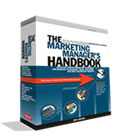
Eric Gagnon (eric@realmarkets.net), is president of GAA, a sales and business development consulting firm, and is the author of The Marketing Manager’s Handbook, the master study guide for the Business Marketing Association’s Marketing Skills Assessment, Skill Builder, and Certification (MSA/B/C) programs.
For more information on The Marketing Manager’s Handbook, available to BMA members at a special discount, link to:
http://www.businessmarketinginstitute.com/book.html
_____________________________________________________________
Test, Train, and Build Your B2B Marketing Skills for Better Sales Success: BMA Announces New Assessment, Training, and Certification for B2B Marketing Managers
For more information on the new BMA Marketing Skills Assessment, Skill Building and Certification (MSA/B/C) training and professional development program, visit http://www.businessmarketinginstitute.com