











Tuesday Marketing Notes (Number 18—January 24th, 2006)
A B2B Marketing Newsletter for BMA Members
____________________________________________________________
MAKE SURE YOU CONTINUE TO RECEIVE EACH ISSUE OF TUESDAY MARKETING NOTES—CLICK HERE TO RENEW YOUR FREE SUBSCRIPTION
(NOTE: if you’ve already signed up previously at this link above, no need to do so again)

Special Savings Promotion for BMA Members—Click here . . .
Start-Ups and New Product Launches (Part 1):
New Venture Planning vs. Reality: Or, How to Write a Marketing Plan You’ll Actually Use
When you’re a marketing professional, there’s no more exciting role than to be involved in a new venture start-up or a new product launch. If you’re the kind of person who likes an environment where everything that’s being done is being done for the first time, and where there’s never anyone around to say “we’ve always done it this way,” then you belong in a start-up or new product launch.
I’ve worked in and for a number of start-ups, including a few of my own, and they’re my favorite kinds of marketing opportunities. On the agency side, they’re also my favorite clients. I’d like to share some techniques I’ve used to develop marketing programs for start-ups, and lessons learned from the realities of the new venture environment.
This week and next week, I’ll cover some techniques for writing, testing, and executing a marketing plan for a startup or new product launch, and I’ll also cover some of the challenges you will face in this environment, either as its marketing manager, or dealing with a start-up as an agency or marketing consultant.
Since new product launches for an existing company also often involve introductions into new markets, for the most part many of these observations I’m making here for start-ups also apply to new product launches in more established companies.
Start-ups Turn on a Dime, So Don’t Fall in Love With Your Marketing Plan
Let me start this article on writing marketing plans for start-ups by telling you not to get too attached to your marketing plan, because you’ll probably be throwing it away to write a new one before too long.
That’s because most startups don’t finish up in the same businesses they started in. To a lesser extent, this is also true for new product launches, who also have to change their market and prospect targeting when their first plan hits the wall. So while it’s always important to have a good marketing plan, it’s just as important to know when you have to change your plan, and in a start-up, that’s likely to be often. Your idea and product may be sound, but your market targeting or presentation may have to change in the face of reality, or new conditions, and this means your plan must change.
I bet you didn’t know that Fred Smith’s original plan for Federal Express was to use small executive jets to shuttle cancelled checks from one Federal Reserve branch to another (that’s what put the “Federal” in Express, by the way). When the Federal Reserve opportunity fell through, Smith changed course and moved forward with his idea to start an overnight small package air freight shipper.
Microsoft was known as a small, semi-successful publisher and seller of programming language software in its first five years of life until IBM contacted them about providing an operating system for its new personal computer. Since Microsoft didn’t have an operating system to sell, Bill Gates had to go outside his company to buy an OS from another company, and sold it to IBM. Now Microsoft was an operating systems company. Now that’s what I call changing your plan to take advantage of a new opportunity!
You might not be as big as Fred Smith or Bill Gates (at least not yet!) but in a start-up or product launch you may find yourself spending weeks getting ready to go with a marketing plan to, let’s say, sell to hydraulic engineers in the oil exploration market one day, only to dump your plan, and replace it with a new program to market to product designers in the domestic auto field a few months later. That’s a typical story for many start-ups.
As a marketing manager, this means you should always be prepared to drop or change your current advertising plans and marketing deliverable prototypes, and create new ones, as opportunities appear and disappear for your start-up or product launch, and as your start-up’s plan and financial conditions change for better or worse.
Here, your ability as a marketing pro to execute well helps you to change your marketing program to enter new markets, crack new business opportunities, and support your start-up’s sales team. If you can change your entire marketing program in a week or two to address a brand-new market, you’ll be ready to take on any new opportunity. If your execution is slow, or faulty, your start-up continues to burn investor money every day your new marketing program isn’t pulling in new leads and sales. So, it’s really up to you, isn’t it?
Writing Your Marketing Plan: Using Market Gap Analysis
I’ve never been very big on writing fancy, over-analytical business and marketing plans that no one ever reads. Instead,I’ve always thought it was most important for the marketing plan to clearly state:
- What market opportunities the start-up is pursuing;
- What makes those opportunities promising, why the start-up, its team, and its product are uniquely suited and positioned to exploit these opportunities, and
- How your team is going to exploit these opportunities.
Item 3.) above—the “how”—is (mostly) the heart of the marketing plan, which is your job.
Marketing plans can take many forms. They can be elaborate or simple (simple is better). The best marketing plan is a short executive summary, defining the positioning, competitive environment, and major benefits used to sell the product, followed by an actual timetable of the marketing media, methods, and activities required to execute the plan. This schedule then becomes the essential daily planning document used to execute the marketing plan.
But before developing a marketing or business plan for a startup, the most important first step is to fill in the essential details revealed by the market gap your startup or new product is designed to fill.
A market gap is the key problem solved by your company’s product or service. And the resulting solution, represented by this product or service, is your start-up’s reason for being in business.
Here are a few examples of market gaps:
• The rise of high-technology industries, and the need for greater manufacturing and distribution efficiency created the need to rapidly ship high-value components, documents, and other items anywhere, overnight was the market gap identified and met by Federal Express;
• The laborious, repetitive process of filling in, erasing, and manually recalculating accounting ledger sheets by hand was the market gap solved by Dan Bricklin and Bob Frankston, who created VisiCalc, the first electronic spreadsheet program for personal computers, and the first “killer app” that led to the widespread popularity of the Apple II, the first mass-market personal computer;
• The need for Web users to find useful and/or interesting Web sites, solved by creating a central, user-friendly online index of worthwhile Web sites, organized by logical, human-readable categories, was the market gap uncovered and solved by Jerry Yang and David Filo when they created Yahoo! in 1994.
It’s likely that you and your start-up’s management team have already identified your product’s market gap—after all, discovering or identifying market gaps is what entrepreneurs do. The market gap, and how your product solves it, is the root of the sales benefits you use in the ads, mailings, and other deliverables of your marketing program.
Start-ups and new product launch teams that successfully identify and solve the problemsrevealed by a market gap will generate sales. Start-ups that fail to identify market gaps will also fail to develop coherent or successful marketing plans, leaving them in the hands of ad agencies, marketing consultants, or other outsiders who may not have the know-how, awareness, or responsibility to identify or exploit market gaps.
General Marketing Assessment Checklist
Once you and your new venture or product launch team have identified the market gap(s) to be addressed by your company, you can use the general market assessment checklist below to help you gather the general marketing and sales information you need, to focus on the markets you plan to address, and fill in other specific information on these markets.
The questions posed by this checklist help you define your general approach to the markets being addressed by your start-up or new product launch:
1.) In general, what are the markets and groups of customers to be served by our start-up or new product launch?
2.) What “market gap” does our company’s product or service fill?
3.) What are the major market segments where these market gaps exist?
4.) What are the estimated market sizes of each of these market segments (i.e., make your best estimate on the dollar value of the market being addressed by your start-up, using credible estimates from reliable third-party industry sources, such as trade associations or industry consultants)?
5.) What prices—and promotional pricing flexibility—will be required in each market?
6.) What sales and distribution networks are required to penetrate these markets?
7.) What are the most common ways products are currently promoted and sold in these markets? Personal sales calls? Direct mail? Phone? Internet?
8.) Who are the existing competitors in each market segment?
9.) What are these competitors’ strengths?
10.) What are these competitors’ weaknesses?
11.) How will these competitors respond to our entry in the market? How can we anticipate, and counter, these actions?
12.) Who are probable future competitors that may appear on the scene in the next 2-3 years?
13.) How many sales calls will be required for each sales close?
14.) How many of our company’s salespeople will be selling in these markets?
15.) Who are the largest corporate customers in each market segment?
16.) Who is the most likely buyer in each market segment, by job title or responsibility?
17.) In what ways are present competitors serving these markets well?
18.) In what ways are these markets poorly served by present competitors?
19.) What are our company’s strengths, and how can we use them to “end run” our competition in these new markets?
20.) What is the positioning, and the major sales benefit statement, required for each market segment?
21.) For each market, what is our current “best guess” of the prospect’s most likely sales objections, and what sales and copy approaches will be used to overcome these objections?
Background Action Items
Once you’ve filled in the answers (or best guesses) on the previous checklist, it’s never too early to start gathering the resources and information you’ll need to develop and execute the concrete marketing projects and deliverables in your start-up.
Here is a basic list of action items that will help you put the rubber to the road, with an emphasis on action:
1.) Who are our targeted prospect buyer(s)?
2.) What are the top two trade publications these prospective buyers read most often?
3.) What are the top two trade shows these prospective buyers attend each year?
4.) Are mailing lists available for the publications read by these prospects?
5.) Can we locate these prospective buyers on other, high-quality mailing lists?
6.) What is the level of Internet usage of these prospective buyers?
7.) What top two trade associations do these prospective buyers belong to?
8.) Are the membership rosters of these trade associations available as mailing lists?
9.) What are the top two independent consulting groups and industry newsletters serving this market?
10.) What are the major Web sites and industry news sites accessed and read by prospects in this market?
Answering these questions gives you the background information you need to price out and develop the hard deliverables you’ll need to execute your marketing plan.
The Most Detailed Level: Required Marketing Deliverables
Once you are well underway with your background research, and your plan begins to take a sharper focus, you can then go to a more detailed planning level by asking the following questions to help you define the specific marketing deliverables you will need to execute your plan:
1.) Based on what I know about this market so far, what is our product’s major sales copy benefit?
2.) What are the other major sales benefits that we can use in our company’s advertising and marketing promotion?
3.) Should we run print advertising? If so, what publications are best for our market? What sizes and frequencies should we run?
4.) Should we run a direct mail program? If so, what mailing lists look most promising?
5.) What hard-copy marketing deliverables, such as high-quality brochures, lower-quality sales flyers, catalog sheets, direct mail packages, and standard sales presentation info kits, will be required?
6.) What other materials will we need to “educate” our customers, and can these materials be offered as sales premiums in our company’s advertising—special reports and booklets, instructional videos, software programs, industry reports, etc.?
7.) What type of Web site should our company have, and how should it promote and sell our company’s product?
8.) Among the two major trade publications read by our target prospects, which writers or editors cover, or seem most knowledgeable about, the applications, technologies, or product areas most closely linked to our company’s product or service?
9.) Can our product’s story be told effectively in a multimedia format? If so, could it be “packaged” for distribution to broadcast media outlets (i.e. CNN, CNBC)?
Answering all of these questions helps you gather the basic and essential background information you need for creating an actionable marketing plan you can use to generate sales response for your start-up or product launch.
The form and structure of your final, written marketing plan isn’t all that important. Often, after answering these questions, I usually end up with little more than a highly detailed set of weekly and monthly spreadsheets covering my entire marketing program, incorporating my projections for sales response from each activity. And yours doesn’t have to be much more complicated than this, either.
At this stage you might be asking: “Is it really this simple? Is this all I have to do to get the information I need to write my start-ups’s marketing plan? Don’t I have to do all that other stuff, like making best-case, worst-case, and most-likely scenarios for sales, etc.?”
I don’t know that the process of writing a marketing plan needs to be any more complicated or analytical than researching, and answering, the questions in these checklists, but I do know that if you do the research that’s required to answer these questions, and start deciding on the marketing activities required to address these items on these checklists, you’re well on the way to developing a workable marketing plan you can actually use, as opposed to a more general, theoretical plan that sits on the shelf once your start-up opens for business.
Once the plan is done, the next step is to test your marketing program, and your product, to determine if they can generate the sales response required to sustain your start-up or new product launch.
Next week, I’ll cover some of the other realities of working in start-ups, and some basic, real-world testing techniques you can use to gauge the sales response of your product or service . . .
Comments? Questions? Send them to me at: eric@realmarkets.net
_____________________________________________________________
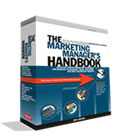
Eric Gagnon (eric@realmarkets.net), is president of GAA (www.realmarkets.net), a sales and business development consulting firm, and is the author of The Marketing Manager’s Handbook, the master study guide for the Business Marketing Association’s Marketing Skills Assessment, Skill Builder, and Certification (MSA/B/C) programs.
For more information on The Marketing Manager’s Handbook, available to BMA members at a special discount, link to:
http://www.businessmarketinginstitute.com/book.html
_____________________________________________________________
Test, Train, and Build Your B2B Marketing Skills for Better Sales Success: BMA Announces New Assessment, Training, and Certification for B2B Marketing Managers
For more information on the new BMA Marketing Skills Assessment, Skill Building and Certification (MSA/B/C) training and professional development program, visit http://www.businessmarketinginstitute.com